
Why Some El Niño Hurricane Seasons Still Produce Early Storms
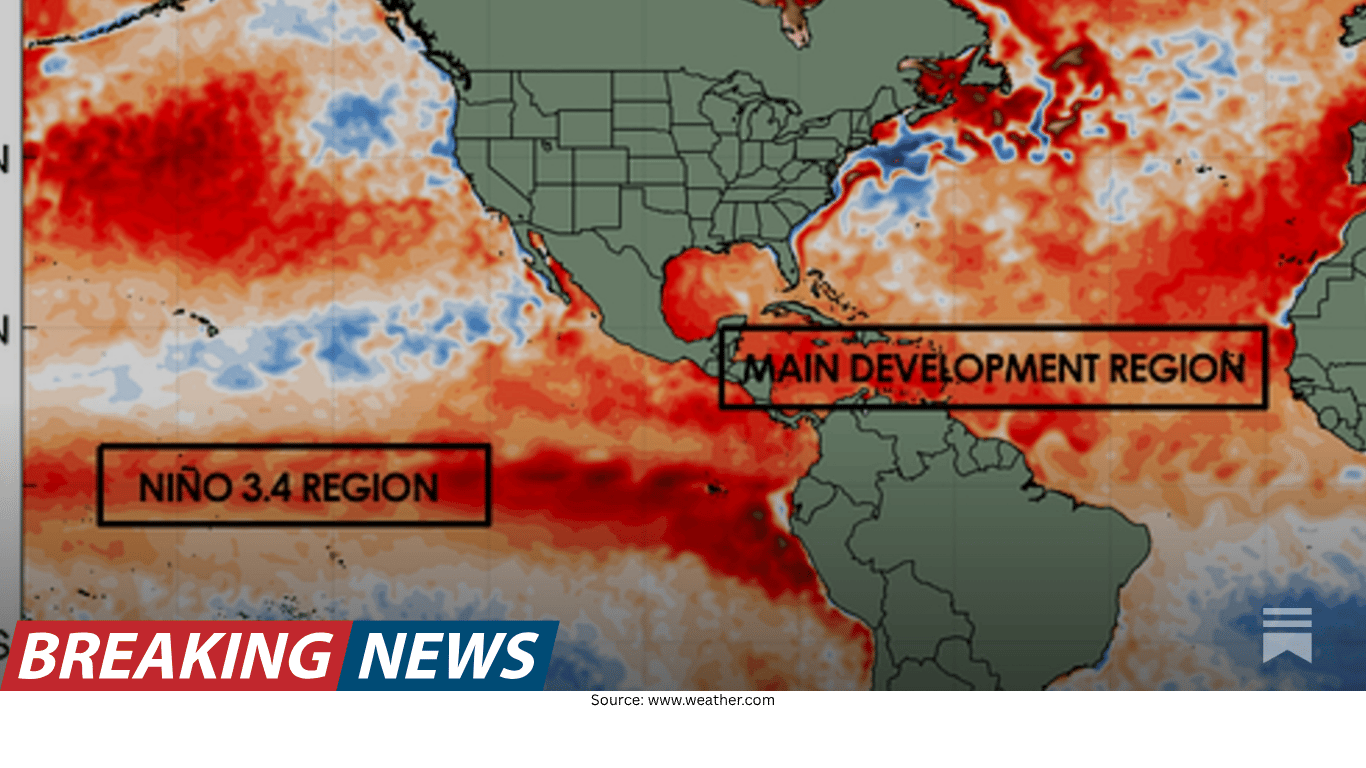
Early storms can happen—even in El Niño years
The Atlantic hurricane season has an official start date of June 1, a marker that helps emergency managers, coastal communities, and travelers shift into a more watchful mode. Yet the atmosphere and ocean do not always follow a calendar. Even in years when an El Niño pattern suggests a quieter season overall, tropical storms can still form in late spring.
That may sound like a contradiction. El Niño is often associated with conditions that suppress Atlantic tropical activity, and seasonal outlooks during stronger El Niño phases can point toward below-average hurricane numbers. Still, recent history shows that “pre-season” storms—systems that develop in May or otherwise before June 1—are possible during El Niño seasons.
Understanding how these early storms form requires separating two ideas that are often blended together in public conversation: the overall seasonal background (which may be less favorable during El Niño) and the short-lived windows in late spring when conditions near the U.S. coastline can briefly support tropical development.
Two recent examples of early or near-early storms
There are recent cases in which storms formed before the official start of the season, or became organized right around the June 1 threshold. Two storms frequently cited in this context are Tropical Storm Arlene (2023) and Tropical Storm Ana (2015). Both illustrate how early-season systems can develop close to land, evolve quickly, and still create meaningful impacts.
Tropical Storm Arlene (2023): Arlene was active in the Gulf of Mexico during the last few days of May, even though it was not officially classified as a tropical system until June 1. It was short-lived, lasting until June 3. The system traveled south before weakening and did not make a direct U.S. landfall.
Tropical Storm Ana (2015): Ana formed on May 8 and made landfall along the South Carolina coast on May 10 near Myrtle Beach, becoming the earliest recorded tropical system to make landfall in the U.S. The storm brought winds of about 45 mph and more than 6 inches of rain. Several homes flooded, and a few water rescues were reported during Ana’s interaction with South Carolina.
These storms also underscore a key point about early-season tropical weather: the strongest impacts are often related to rainfall and flooding rather than extreme winds. Even a relatively weak tropical storm can produce serious flash flooding, especially if it moves slowly or repeatedly feeds moisture into the same areas.
Why El Niño doesn’t rule out pre-season storms
El Niño can tilt the odds toward fewer Atlantic storms by increasing wind shear—changes in wind speed and direction with height that can disrupt the structure of developing tropical systems. In many El Niño seasons, that shear is one of the major atmospheric factors that reduces the number of storms that can organize and intensify.
However, early in the season, the full influence of that wind shear may not be in place yet. That creates a small window in which a tropical system can spin up, particularly close to shore where other ingredients—such as warm water—may be available. In other words, a season can still be “below average” in a broad sense while producing a brief late-spring curveball.
This is why it can be misleading to treat an early storm as proof that a seasonal outlook is wrong. Seasonal forecasts describe the overall background pattern and the most likely range of activity across months, not a guarantee that nothing will happen before June.
The most common early-season pathways to development
Early-season tropical storms often form differently than the classic late-summer systems that develop from tropical waves far out in the Atlantic. In spring, the atmosphere over the southeastern U.S., the Gulf of Mexico, and the western Atlantic can support storm development through a couple of recurring setups.
1) Low pressure systems drifting into warm water
One common route begins with a low-pressure area moving across the southeastern United States during spring. This pattern is typical for the season and can bring rounds of severe weather. Sometimes, that low pressure drifts south into the Gulf of Mexico, where it encounters warmer water.
If the system can tap into that warm water and organize, it may acquire tropical characteristics and become a tropical system. These storms often form near the coast and tend to be weaker. Another hallmark is timing: there is frequently not much time between formation and landfall, which can compress preparation timelines even if the storm is not particularly strong.
2) A stalled frontal boundary near the Southeast coast
A second pathway involves a stalled front. During spring, fronts do not always push cleanly offshore; they can slow down and become stationary near the Southeast coast. When that happens, the stalled boundary can promote unsettled weather over the warm waters of the Gulf and the western Atlantic.
That unsettled pattern can give a potential tropical system enough time to organize and develop. As with low-pressure-driven systems, these storms often form close to land, can be relatively weak, and may spin up quickly compared with peak-season hurricanes.
Why “weak” doesn’t mean “low impact”
Because early-season storms often develop close to shore and may be limited in strength, it can be tempting to dismiss them as minor. But the practical impacts can still be serious, especially when heavy rain falls over a short period or when a storm’s motion slows.
Flash flooding is a particular concern. Quick-developing systems can deliver intense rainfall, and slow-moving storms can prolong that threat. Ana’s impacts in South Carolina—more than 6 inches of rain, flooded homes, and water rescues—are a reminder that early-season storms can cause real damage and dangerous conditions even without major hurricane winds.
Early storms don’t predict the rest of the season
One of the most persistent misconceptions about hurricane season is that the timing of the first named storm reveals what the entire season will be like. In reality, there is little correlation between how early the first named storm forms and how busy the full season becomes.
Some years that feature May storms go on to be relatively quiet. Other years that start late can still end up extremely active. The factors that determine the season’s overall activity are broader and more persistent than a single early storm.
Those broader factors include atmospheric wind shear, ocean temperatures, and thunderstorm activity in the tropics. Together, they shape whether storms can form repeatedly, sustain themselves, and potentially intensify during the peak months of August and September. During strong or “super” El Niño seasons, tropical activity is typically lower, even though a short early-season window may still allow a storm to develop.
What staying aware looks like in late spring
Early-season systems do not always follow the same playbook as storms in late summer. They can form from non-tropical features like springtime lows or stalled fronts, and they can develop near the coastline with limited lead time. That makes awareness important even before the calendar flips to June.
For coastal residents and anyone with travel plans along the Gulf Coast, the Southeast coast, or nearby areas of the western Atlantic, the practical takeaway is straightforward: the official season start is a useful milestone, but it is not a hard boundary for risk. May storms are not common every year, yet they are possible— including in years influenced by El Niño.
Key points to remember
The Atlantic hurricane season officially begins June 1, but storms can form earlier.
Some El Niño years have produced pre-season storms, even when seasonal forecasts suggest below-average activity.
Early storms often form near the coast, frequently from springtime low pressure systems or stalled frontal boundaries.
These systems are often weaker in wind intensity, but they can still cause serious flash flooding, especially if slow-moving.
An early named storm does not reliably indicate that the rest of the season will be busy.
Seasonal outcomes depend on broader patterns such as wind shear, ocean temperatures, and tropical thunderstorm activity.
In short, an El Niño-leaning outlook may reduce the odds of an especially active hurricane season, but it does not eliminate the possibility of an early storm. Late spring can occasionally provide just enough opportunity for development near warm coastal waters—making May a month when it still pays to pay attention.