
Light Pollution Puts the Atacama Desert’s Dark Skies—and Global Astronomy—Under Pressure
A desert where the night sky arrives in stages
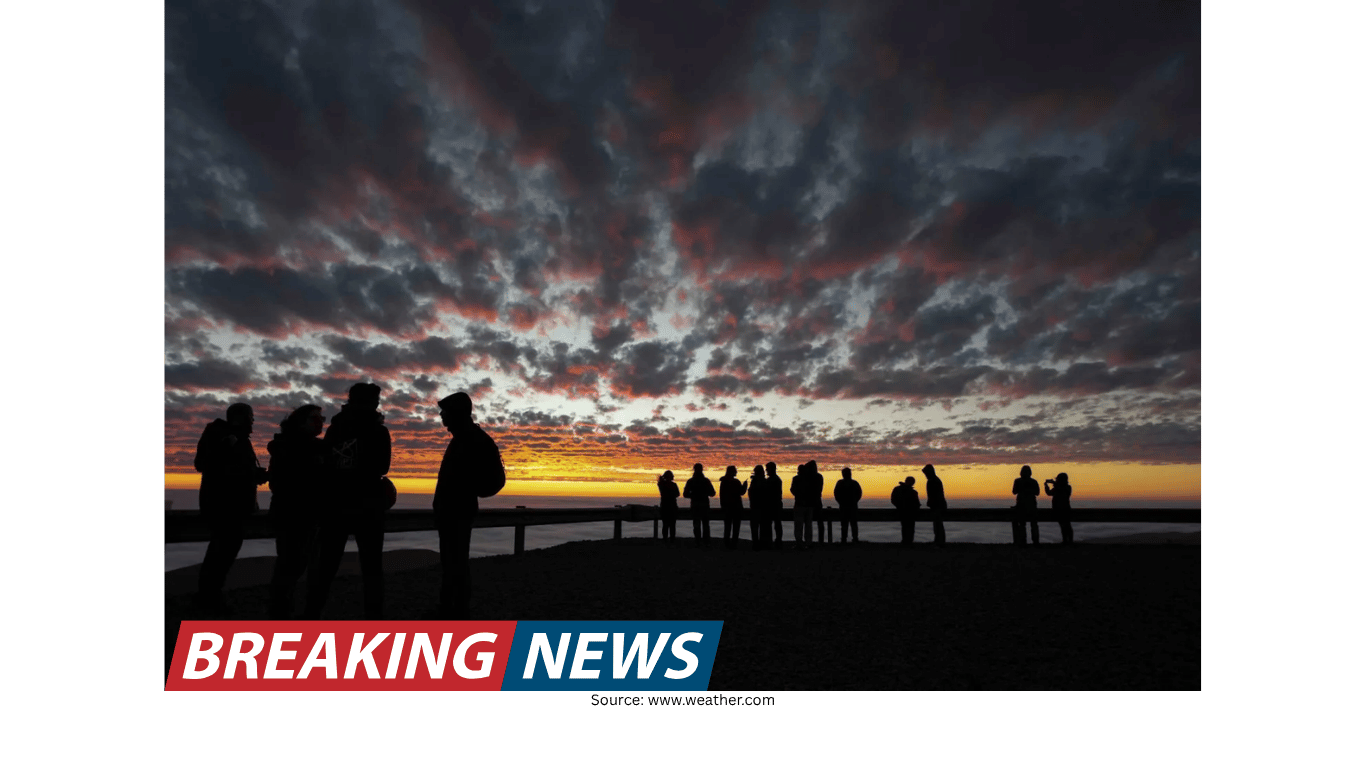
In Chile’s Atacama Desert, darkness does not simply fall; it reveals itself. It takes a moment for the eyes to adjust, and then the sky begins to assemble: a faint spark, another brighter point, and soon a growing map of stars and planets. Constellations emerge as if drawn in real time. Before long, an entire galaxy can stretch across the dome overhead, visible without a telescope.
This experience is not only poetic. It is also scientific infrastructure. The Atacama is widely regarded as the driest place on Earth, and its dryness is a key reason its skies are so clear. Combined with high altitude and isolation from urban light pollution, the region offers conditions that astronomers describe as exceptional—so exceptional that the Atacama has become an unrivaled hub for world-class astronomy and the location of some of the largest ground-based astronomical projects on the planet.
Why the Atacama is a global center for astronomy
Astronomy depends on more than advanced instruments. It depends on the atmosphere above them and the environment around them. In the Atacama, scientists point to a rare combination of factors that work together: a dry climate, high elevation, and distance from major sources of artificial light.
Chiara Mazzucchelli, president of the Chilean Astronomical Society, has emphasized the frequency of usable nights. In her description, the Atacama offers more than 300 clear nights per year—meaning no clouds and no rain. That kind of consistency matters for observatories that schedule long campaigns of observations and for international teams that travel to Chile for limited windows of telescope time.
Across northern Chile, there are nearly 30 astronomical sites, many managed by international organizations. The Atacama draws thousands of astronomers and scientists each year who come to investigate questions tied to the origins of the universe. Within this landscape, the Paranal Observatory—managed by the European Southern Observatory (ESO)—stands out as both a major research site today and the future home to what is expected to be the most powerful optical telescope ever built.
Inside “Photon Valley”: powerful instruments, fragile conditions
Paranal sits in the heart of a high-altitude corridor sometimes referred to as “Photon Valley,” where multiple observatories operate side by side using some of the most sophisticated instruments ever engineered. The concentration of facilities underscores the region’s importance—and also highlights how much is at stake if the surrounding environment changes.
Itziar de Gregorio-Monsalvo, ESO’s representative in Chile, has described the organization’s telescopes as among the most powerful astronomical facilities on the planet. The appeal of such sites is so strong that access is competitive. Julia Bodensteiner, an assistant professor at the University of Amsterdam, has noted that the chances of being selected as a visiting astronomer at Paranal are only 20% to 30%.
Yet the same conditions that make the Atacama ideal for astronomy also make it physically demanding. The terrain is rocky and uneven, and at altitudes exceeding 3,000 meters (10,000 feet), oxygen becomes a luxury. Scorching daytime heat gives way to relentlessly cold nights. For telescopes, however, these hardships translate into advantages: stable, dry air and a sky that is often free of cloud cover.
The Extremely Large Telescope: a flagship project built around darkness
Among the most ambitious projects enabled by the Atacama’s environment is the Extremely Large Telescope (ELT), an ESO endeavor scheduled for completion in 2030. The project’s scale is reflected in its price tag—$1.5 billion—and its engineering: 798 mirrors and a light-gathering area of nearly 1,000 square meters (about a quarter of an acre).
ESO has said the ELT is expected to be 20 times more powerful than today’s leading telescopes and 15 times sharper than NASA’s Hubble Space Telescope. Such capabilities are designed to push the boundaries of what can be detected from Earth’s surface. ESO astronomer Lucas Bordone has said that with the ELT, scientists should be able to see Earth-like planets in what is called the habitable zone—planets considered candidates in the search for life.
Researchers also stress that the data compiled at these observatories has broad significance. The information gathered is described as fundamental not only for life on Earth, but also for understanding the possibilities of its development beyond our planet. In that context, preserving the quality of the Atacama’s night sky is not a niche concern. It is a prerequisite for the work these facilities were built to do.
When development meets the night: a recent dispute near Paranal
Despite its remoteness, the Atacama is not immune to competing land uses. In recent years, the desert has become a coveted territory shaped by urban sprawl, industrial development, and the arrival of mining and wind farms. Scientists say that balancing those pressures with the needs of astronomy is not always easy.
That tension became highly visible last year, when a proposed green power complex was slated for construction just kilometers from the Paranal Observatory—about 10 kilometers (6 miles) away. The proposal sparked a confrontation between scientists and the energy firm behind the plan, escalating into a high-profile campaign that drew support from astronomers, physicists, and Nobel laureates.
The company ultimately canceled the project in late January. But for many in the scientific community, the episode served as a warning rather than a conclusion. The dispute exposed concerns that existing sky preservation laws are lax, outdated, and unclear—conditions that could leave astronomical sites vulnerable to future proposals.
What astronomers say is at risk: light, dust, vibrations, turbulence
For observatories, the threat is not only a brighter horizon. Scientists raised alarms about multiple potential impacts linked to nearby construction and industrial activity. Among the concerns cited were increased light pollution, micro-vibrations, dust, and greater atmospheric turbulence—factors that could make astronomical activities unviable.
Light pollution is the most intuitive of these risks: artificial light can wash out faint celestial signals and reduce the effective sensitivity of instruments designed to detect them. But the list is longer. Dust can interfere with equipment and degrade observing conditions. Micro-vibrations can affect the precision of delicate instrumentation. Atmospheric turbulence can distort incoming light, undermining the clarity that high-altitude sites are chosen to provide.
Gregorio-Monsalvo has offered a blunt comparison to explain why location matters as much as size: if a telescope like the ELT is placed next to a city, its 40-meter diameter becomes far less meaningful. In her words, it would be like having a tiny telescope. The point is not rhetorical. It reflects how quickly environmental conditions can erase the advantages of advanced design.
Living in the dark to protect the dark
The sensitivity of these observatories is reflected in the daily routines of the people who work there. At Paranal, specialists live in an underground residence designed to keep their presence almost undetectable. Windows must remain covered. Hallways stay dark. Outdoor movement is guided by flashlight. Even faint light can interfere with the telescopes.
This is a striking contrast: some of the world’s most advanced instruments are operated by teams who work in near darkness to keep the surrounding environment stable. The observatory’s internal discipline underscores a broader reality. If a small amount of light from a window can matter, then the cumulative impact of a major development nearby can matter even more.
Regulations under review, but uncertainty remains
After the proposed energy complex was canceled, the debate shifted toward policy. Several environmental regulations have come under review, including one from Chile’s science ministry that targets protected astronomical zones. Daniela González, director of the Cielos de Chile Foundation—a nonprofit founded in 2019 to protect the quality of Chile’s night skies—has said work is underway to ensure new criteria are strict enough to guarantee there will be no impact on astronomical areas.
Even so, some scientists argue that the underlying vulnerability remains. Eduardo Unda-Sanzana, director of the Astronomy Center at the University of Antofagasta, has said that despite media attention, the situation has not fundamentally changed without updated rules. He is also part of a ministerial advisory commission that delivered recommendations to Chile’s government following the incident.
Unda-Sanzana’s concern is straightforward: without clearer, stronger regulations, similar projects could be proposed again at any moment. For observatories that plan decades ahead—and for projects like the ELT that depend on long-term stability—uncertainty itself becomes a risk.
A changed landscape: from “an ocean of darkness” to contested territory
Scientists who have watched the region over time describe a visible transformation. Unda-Sanzana has recalled that 20 years ago the Atacama Desert was “an ocean of darkness,” where it felt like it was just you and the universe. Over the years, he says, the landscape has changed drastically.
The drivers he points to are familiar in many regions: urban growth, industrial expansion, and resource development. In the Atacama, these pressures have arrived in a place that is simultaneously a major scientific asset and an attractive site for large-scale projects. The result is a growing need to define what kinds of development can coexist with astronomy—and under what conditions.
History as a warning: a solar observatory forced to close
For Chilean astronomers, the debate is not only about what might happen. It is also about what has happened before. Unda-Sanzana has pointed to a precedent from the early 20th century: the first international heliophysics observatory in Chile, a major solar station operated by the U.S. Smithsonian Institution, was forced to shut down operations in 1955 due to environmental pollution linked to the expansion of mining activity in the area.
That closure is often cited as a lesson in how quickly scientific capacity can be undermined when environmental conditions deteriorate. Unda-Sanzana has argued that Chile has had decades to learn from that history and avoid repeating the same mistakes.
What preservation means in practice
Protecting dark skies is sometimes framed as a cultural or aesthetic goal, but in the Atacama it is also a technical requirement. The region’s scientific value is inseparable from its darkness and atmospheric stability. That makes preservation a practical question: how to keep the conditions that make the Atacama unique while navigating the pressures of development.
Based on the concerns raised by scientists and institutions working in northern Chile, effective protection would need to address multiple dimensions of impact—not only visible brightness. It would also need to consider dust, vibrations, and other environmental changes that can degrade observations even if the night sky still appears dark to casual visitors.
The recent dispute near Paranal showed that public attention and organized advocacy can influence outcomes. It also revealed how much depends on the clarity and strength of rules before projects are proposed, not after. For the global astronomy community that relies on Chile’s high-altitude deserts, the stakes are measured in decades of research and in the performance of instruments built to answer some of science’s most fundamental questions.
Key facts at a glance
- The Atacama Desert combines extreme dryness, high altitude and isolation from urban light pollution, supporting more than 300 clear nights per year.
- Northern Chile hosts nearly 30 astronomical sites, many managed by international organizations, and draws thousands of visiting scientists annually.
- The Paranal Observatory is managed by ESO and is tied to major current and future projects, including the Extremely Large Telescope (ELT), scheduled for completion in 2030.
- A proposed green power complex planned about 10 kilometers (6 miles) from Paranal was canceled in January after widespread scientific opposition.
- Scientists say risks from nearby development can include light pollution, dust, micro-vibrations and increased atmospheric turbulence, potentially making observations unviable.
- Chile is reviewing environmental regulations, including rules targeting protected astronomical zones, amid concerns that existing laws are outdated or unclear.
A window to the universe, dependent on choices on Earth
On a clear night in the Atacama, the sky can feel endless, as if the universe is close enough to touch. But the darkness that makes that experience possible is not guaranteed. It is the product of geography and climate, yes—but also of policy, planning, and restraint.
The cancellation of a nearby industrial proposal offered a reprieve for Paranal and for the scientists who rely on the region’s extraordinary conditions. The broader challenge now is whether protections can be defined clearly enough to keep the Atacama’s skies dark in the years ahead, as development pressures continue to reshape the desert. For astronomy, the cost of getting that balance wrong is simple: once the darkness is diluted, the window narrows.